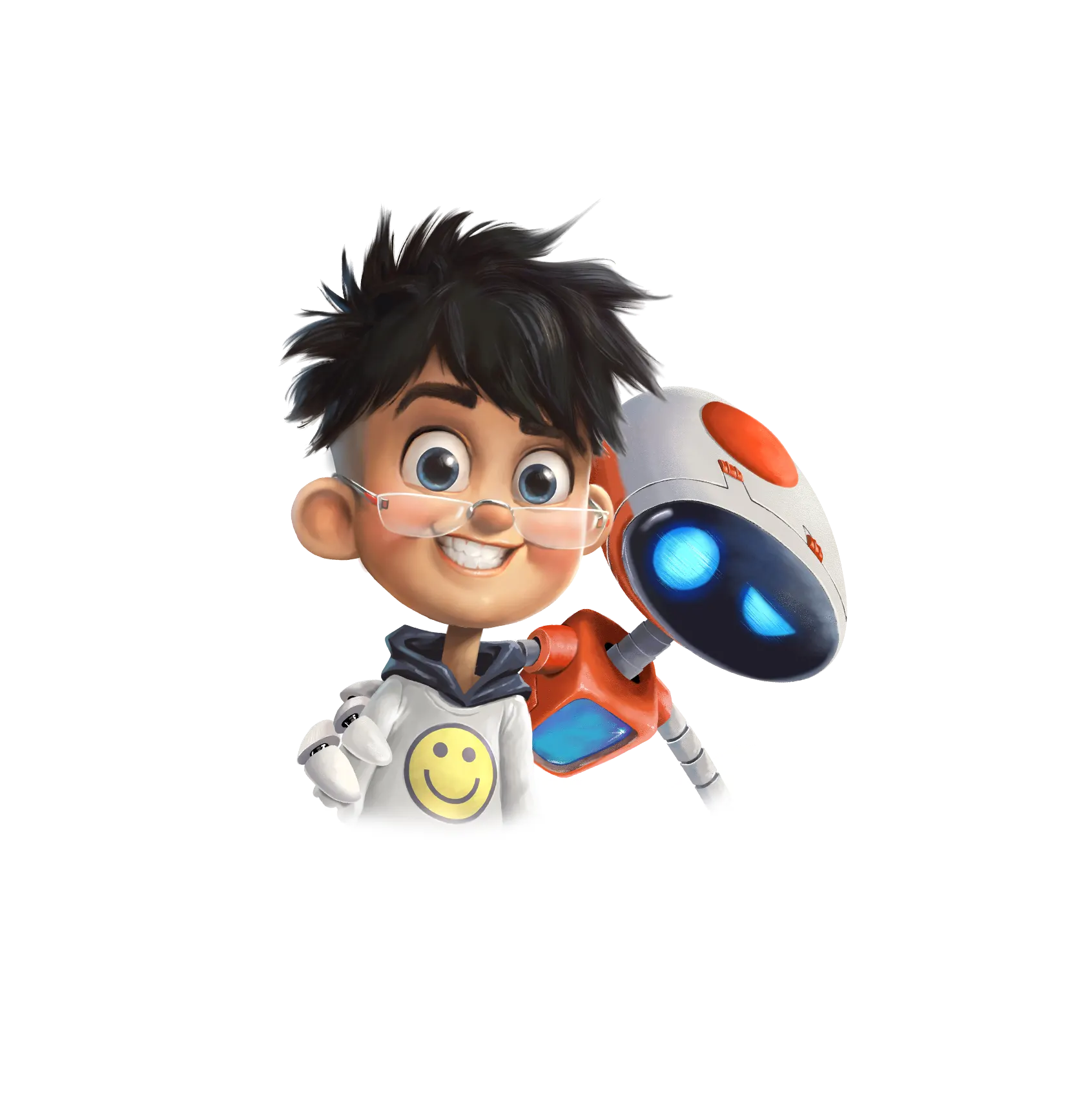
How Animation Services Help Businesses Break Language Barriers

An explainer video that performs well in the USA may struggle to reach customers in Japan. Likewise, an onboarding video that connects with employees in Germany may create less impact on the teams in Brazil. In most cases, the problem is not with the product, message, or strategy, but the way the content communicates across languages and cultures. The real problem is that most videos are created with words at the center, treating translation as an afterthought. This is where animation services become a powerful business tool. By relying on visuals, storytelling, and universally understood cues, it builds communication that is designed to break language barriers. From simplifying complex ideas and reducing dependence on text to enabling easy localization and creating culturally adaptable narratives, animation helps businesses connect audiences effectively in ways traditional content often cannot.
How Animation Connects Global Audiences
Let’s understand what makes animation content easier to connect with and elevate the effectiveness of the communication.
Visual Storytelling
Unlike live-action videos that often rely heavily on dialogue and cultural nuances, animation has a unique advantage. It is built from a series of visual decisions such as framing, movement, colour, expressions, and timing. The message conveying process is not entirely based on the translation, but on the visuals that appear on the screen. That is why many animated advertisements remain engaging even when watched on mute or without subtitles. Viewers can still understand the sequence of events, recognize emotions, and grasp the intended outcome because the visuals provide context and meaning independently of the narration. For example, a product explainer video first introduces the problem, then shows the solution, most of the time without voiceover or text, and with a localized script, even though it demonstrates how the product becomes beneficial.
Universal Body Languages
Research reveals that certain emotional expressions are widely recognized across cultures, but the way people display those emotions is often influenced by social and cultural norms. Psychologist Paul Ekman and his colleagues found that people across cultures, including the isolated Fore community of Papua New Guinea, could reliably recognize six basic emotions: happiness, sadness, fear, anger, surprise, and disgust. They also pointed out that while these core emotional expressions may be universal, cultural factors may affect how these emotions are expressed. This indicates that cross-cultural communication should rely on broadly recognizable emotional cues while remaining adaptable to local cultural norms and expectations. Professional animation companies can create expressive characters that rely on clear facial expressions, posture, and movement to convey emotions that resonate across borders.
Expressive Characters
Viewers create the first impression from what they see, even before what they hear or read. That’s why expressive characters are a strategic approach in animation. Well-designed animated characters use exaggerated, but not overly caricatured, poses that instantly communicate intent. Clear silhouettes make actions easy to understand, while carefully directed eye movements and deliberate timing guide the audience’s attention and emotional response. Video animation also follows principles like squash and stretch, timing, and spacing to make emotions feel authentic. A memorable animated mascot, a virtual onboarding guide, or the host of an explainer video can build familiarity and trust in ways that transcend language
Visual Metaphors and Non-Verbal Cues
Certain ideas are hard to explain with words alone. Themes like growth, trust, progress, and transformation often require lengthy explanations when communicated through text. At the same time, animation can make abstract ideas instantly understandable through visual metaphors and non-verbal cues. Visual metaphors – a lightbulb representing an idea, a locked door representing an obstacle, a staircase symbolizing progress – are understandable across regions. The meaning is communicated visually, often before any words are processed. This idea is supported by Conceptual Metaphor Theory, introduced by cognitive linguists George Lakoff and Mark Johnson in 1980. It states that human beings understand abstract concepts by connecting them to concrete, physical experiences.
Simplified Localization
The research highlights the importance of native-language localization in e-commerce, showing that 40% of global consumers will never purchase from websites in another language, while 75% are more likely to make repeat purchases when after-sales support is available in their native language. Multilingual content has become the cornerstone of the brand’s success. The major challenge is that localization can quickly become expensive, especially with live-action video. One of the biggest benefits of using animation services is that when a visual asset is created once, it can be built in separate layers. An animated video created for English-speaking audiences can be adapted for French, German, Japanese, or Arabic viewers without rebuilding the animation from scratch. Keeping on-screen text in editable layers rather than permanently embedding it into the video frame makes each new language version a simple content update instead of a costly redesign, significantly reducing localization costs over the video’s lifetime. By choosing animation, businesses can produce and localize high-quality content without compromising.
Cultural Adaptability
A message can be perfectly translated and still fail to connect if it doesn’t reflect the audience’s cultural values and expectations. This is where cultural adaptability becomes essential. Colours, symbols, gestures, and even storytelling styles can carry different meanings across regions. For example, some cultures respond better to individual success stories, while others connect more with themes of family and community. Animation makes these adjustments easier. Characters, visuals, pacing, and cultural references can be adapted during the design stage without costly reshoots or rebuilding the entire video. This flexibility allows businesses to create content that feels familiar and relevant to local audiences. By adapting the experience, not just the language, animation reduces cultural misunderstandings and strengthens cross-cultural communication.
Benefits of Using Animation Content for International Communication
- Breaks language barriers
- Simplifies complex messages
- Supports cost-effective localization
- Enhances cross-cultural communication
- Increases audience engagement
- Improves information retention
- Provides cultural flexibility
- Ensures consistent brand messaging
- Improves accessibility
- Accelerates global market expansion
- Reduces localization costs
- Enables scalable content creation
- Builds emotional connections
- Strengthens global brand presence
- Delivers long-term value from content investments
An Animation Studio That Supports Your Global Vision

Reaching global audiences requires content that goes beyond language and connects through compelling visual storytelling. As a leading animation production company in India, Prayan helps businesses create animated content that resonates across cultures and markets. Serving clients in the United States, the United Kingdom, France, Spain, Germany, Italy, Canada, and the United Arab Emirates, the studio specializes in producing culturally adaptable content that simplifies complex ideas and engages audiences worldwide. From 2D animation and 3D animation to explainer videos, product demos, game animation, and branded storytelling, Prayan delivers high-quality productions with a cost-effective approach. Its experienced team combines creativity, technical expertise, and efficient production processes to help brands localize content, maintain consistent messaging, and communicate effectively across linguistic and cultural boundaries.
Take your message global
Successful global communication is not just about translating words. It is about creating messages that people can understand, relate to, and remember, regardless of the language they speak. Animation achieves this by placing visuals, emotions, and storytelling at the center of communication, reducing the need for extensive adaptation later. As businesses continue to expand into international markets, many are increasingly treating animation services as the foundation of their global content strategy rather than an afterthought. Whether you are planning an explainer video, developing a brand character, or launching a global marketing campaign, the right animation partner, like Prayan Animation Studio, can help your message cross borders with ease. Ultimately, the power of animation lies in its ability to turn complex ideas into stories that can be understood, appreciated, and remembered across borders.
Planning to create animated content that connects beyond borders?
Partner with Prayan Animation Studio and bring your story to audiences worldwide.







 We can help you.